Local relining guide
What relining actually is, and when it suits North Sydney
Access is the constraint, not the ground
Elsewhere the question is what it costs to dig. Here it is frequently whether anybody can dig at all, because a terrace is sealed on both sides and the street is narrow and parked out.
There is no route for a machine, nowhere for spoil, and no vehicle access to take it away.
So excavation on this housing is not merely expensive. It is often physically impractical, which changes the nature of the decision entirely.
How it works, without the brochure language
A liner saturated in resin goes into the damaged section, is inflated against the existing pipe wall, and cures there into a new pipe formed inside the old one.
Continuous, smooth, slightly smaller in bore, and structural in its own right rather than a coating.
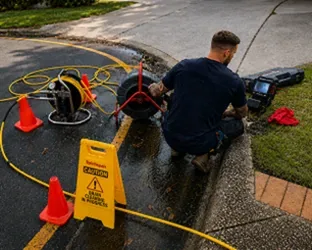
It goes in through an existing access point, with equipment carried in by hand, which is exactly what this housing allows.
Patch, or the whole run
One bad joint in an otherwise sound pipe is a patch liner: half a day, one access point, and considerably cheaper than lining the run.
Openings along the length is a full run, and on century-old jointed pipe that is frequently what the footage shows.
The camera decides which, and you should see the recording rather than be told about it.
Cast iron and the bore you cannot see
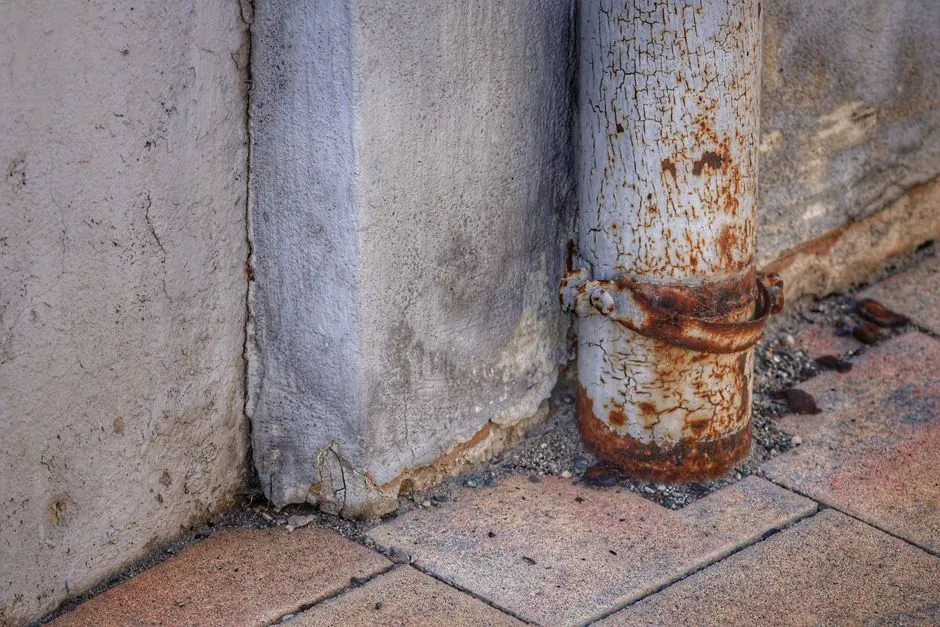
Where the line is original cast iron, it has been corroding internally for a very long time and the bore may be well down from what it started as.
A liner restores a smooth continuous surface, which on a narrowed pipe is a capacity improvement as well as a seal.
Whether enough sound material remains to line against is a question the camera answers, and the answer changes over time.
Junctions, in houses that have been altered for a century
A liner covers the openings where branch lines join, so those are cut back open from inside once the resin has cured. It is routine and it is confirmed on camera.
In a house where bathrooms and kitchens have been moved repeatedly, there are more junctions than anybody expects, and they are the most interesting part of the before footage.
A missed one stops that branch draining, which is immediately obvious rather than hidden.
Shared and boundary lines
Terraces frequently share drainage or run a line along a neighbour's boundary, which makes excavation a negotiation as well as a job.
A liner installed from your own access point avoids the negotiation entirely, and it repairs the shared section for everybody on it at once.
How the cost gets divided is for the owners rather than for us, and we quote it once so everybody is looking at the same document.
What relining cannot do
It restores the pipe. It does not change the gradient the pipe was laid at, because the liner takes the shape of the host it cures inside.
So a run that films as sound but keeps blocking in one place is a fall problem, and no liner addresses it.
On a street where excavation is impractical, knowing that early matters more than it does elsewhere.
A collapse needs the section replaced
A liner needs a host holding roughly its original shape to be formed inside. A crushed length has nothing to form against.
That is the scenario worth establishing early here, because it is the one that brings the access problem back into it.
A short open repair plus a liner over the remainder keeps any opening to one place, which on these frontages matters a great deal.
Why we quote both ways
You should be able to compare, so both figures come together for the same defect, with the length in metres and what each includes.
On this housing the excavation figure sometimes comes with an honest question about whether it is practical at all, and we will say so rather than quote something we doubt.
If a quote offers only one method, ask what the other would cost.
You keep both recordings
Before and after, plus a written account of what was found and done. Yours whatever it shows.
On a shared or boundary line it is worth giving a copy to whoever else is connected, because it is the only record of an asset none of you can see.
Worth filing with the property papers rather than in a folder of receipts.