Terraces with a century and a half of alterations behind them, redundant points in walls, and heritage streets. Leaks made safe and a compliance certificate lodged on every job.
Online Now!·--:--
This is some of the oldest domestic gas in the country, in houses that have been altered more or less continuously since the 1880s.
The original pipework is rarely the culprit. Sound copper does not simply fail. What fails is a connection, and a terrace of this age has accumulated dozens: appliances swapped, heaters installed and later abandoned, hot water changed several times, a kitchen relocated during a renovation in the seventies and again in the nineties. Every alteration is a joint, and joints are where leaks live.
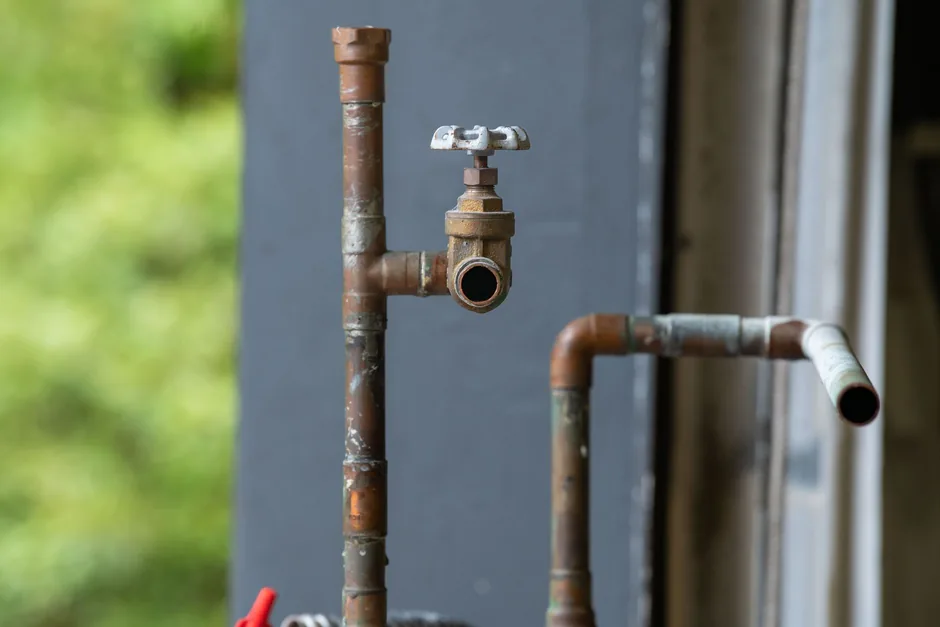
The second thing we find constantly is redundant pipework. Capped points behind plaster from heaters nobody alive remembers, some sealed properly and some simply plugged. They are not an emergency, but they are worth checking and correctly terminating while someone licensed is already on site.
The third is access. There is no side passage, so any new run goes through or under the house, and on original floors in a conservation area that is a conversation before it is a quote.


Get out, leave the switches alone, and ring from the footpath. In a terrace, knock on both neighbours on the way past.
Open up, get out, touch nothing electrical, and ring from the street. In a terrace, tell the neighbours either side as you go.
Turn the gas off at the meter if you can reach it safely. On these houses it is frequently in the front wall at the footpath, which makes that easy.
A licensed gas fitter answers when you ring us, and where the network's emergency crew is the right first call we will say so.
Original runs in sound copper rarely fail by themselves. Connections do, and this housing has accumulated a great many of them across generations of owners and appliances.
Some of the oldest domestic gas in Sydney runs through these streets, altered continuously since it went in.
So an inspection here looks at the joints rather than the length, and testing what exists is part of connecting anything new.
Gas heaters were standard in these houses for generations, and most have been removed. The branch that fed them frequently has not.
A point capped at the outlet and then covered by a renovation is invisible and unreachable, and you cannot tell from the room whether it is live.
So decommissioning properly, back to the main run, matters more here than in newer housing, and it is licensed work rather than a favour.
A terrace is sealed on both sides, so a new line to the rear goes through the building rather than around it, following whatever internal route exists.
Cupboard lines, subfloors and existing service paths are the cheap routes where they exist, and finding them is part of quoting the work.
That is why a quote here comes from somebody having looked rather than from a price per metre.
Gas lines are sized for a load, and the load in a Victorian terrace was small. A modern cooktop or a continuous flow hot water unit asks considerably more.
The input rating on the appliance plate is the number the calculation runs on, and a photograph of it is enough to start.
Where the sums do not work, appliances starve each other, and a burner that drops off whenever somebody runs a shower is nearly always this.
A flue terminal has required distances from windows, doors and vents, and on a terrace those openings frequently belong to somebody else.
There is nearly always a compliant answer, but it has to be worked out rather than assumed, and worked out before an appliance is bought.
Heritage controls on a visible elevation can narrow the options further.
An appliance burning indoors consumes air from the room, and the rooms in these houses were never large.
A century of draught proofing, replacement windows and sealed fireplaces has removed most of the ventilation the original construction provided without anybody intending to.
So a room that supported a gas appliance for decades may no longer, without the gas having been touched.
Certifying a new appliance on a line losing pressure elsewhere achieves nothing, so the existing installation gets tested as part of connecting anything new.
On pipework this old and this altered, that occasionally finds something.
When it does we tell you before doing the work rather than after, which is why a straightforward swap sometimes becomes a longer conversation.
Because the parts that matter are invisible once it is finished. Sizing, pressure testing, clearances, flueing and ventilation all get covered up on the day.
A working appliance tells you the gas got there. It tells you nothing about the diameter of the pipe, whether the line held pressure, or where the flue ends up.
The certificate exists to record exactly those things, which is why it is worth keeping and worth chasing if you never got one.
Every gas job finishes with a Certificate of Compliance recording what was done, that it was tested, and under whose licence.
On a building where the gas has been altered by a dozen owners over a century and a half, your own paperwork is the only part of that history you can rely on.
Keep it with the property papers. It cannot be recreated afterwards and it is what an insurer asks for.

Fixed price agreed before anything starts. Indicative 2026 Sydney ranges, and the compliance certificate is included in every one of them.
The installation isolated and put under pressure, with the result explained plainly.
Cooktop, oven or heater onto a point already there and correctly sized for the load.
Traced, repaired and retested. In this housing, access moves the figure more than the repair.
Priced on the route. Through or under a terrace is not the same as around a freestanding house.
Issued and lodged on every gas job. Never a separate line on our invoice.

If you can smell gas we tell you to get out, leave the switches alone and ring from the footpath before anything else is discussed.

The installation comes off supply and goes under pressure. The gauge answers the question rather than opinion doing it.

Work to AS/NZS 5601, with the line checked against the appliance load and any redundant points sealed properly while we are there.

Certificate issued, lodged with the supplier, copy to you. On a house this old, keep them all together, they are worth something at sale.
Get everyone out, do not touch a switch, and ring from the footpath. Knock on both neighbours on the way. If it is strong, call the gas emergency line first.
Call 1300 381 569
Get everyone out. Do not touch a light switch, a power point or anything that could spark. Do not use a phone inside. Once outside, turn the gas off at the meter if you can reach it safely, then ring from the footpath. In a terrace, knock on both neighbours as well: shared walls and shared front recesses mean a gas smell is rarely one household's problem. If the smell is strong, ring the gas emergency line first and us second.
The original run is rarely what fails. What fails is a connection, and a house that has been lived in since the 1880s has accumulated a great many: a cooktop replaced, a heater added and later removed, hot water changed three or four times, a kitchen moved during a renovation. Every one of those is a joint. A pressure test settles the question in about half an hour rather than leaving you wondering, and the rate of any drop tells us roughly how big before anything is opened up.
Usually, if it was capped properly by someone licensed, and not if it was not. Redundant gas points are extremely common in this housing because appliances have come and gone for decades. A cap that is simply a plug pushed into a fitting is not the same as a correctly sealed and tested termination. It costs very little to have redundant points checked and properly capped during any other gas visit, and it is worth doing.
Yes, without exception, and that includes connecting a cooktop you bought yourself. Unlicensed gas work voids home insurance, and in a terrace it also exposes you to the neighbours either side if something goes wrong. Our licence number is 368473C and it goes on every quote before you accept it.
It is the document a licensed gas fitter issues certifying the work meets AS/NZS 5601. In NSW it is lodged with the supplier and a copy comes to you. It matters when you sell, because a conveyancer asks for it, when you claim, because an insurer asks for it, and it is the only proof the installation was ever pressure tested. On a house this old, a folder of certificates is genuinely valuable at sale. We issue one on every gas job, included.
Often yes, but the route is the question rather than the work. There is no side passage in a terrace, so a new run goes through or under the house rather than around it, and on a property with original floors that needs thinking about before it needs quoting. Where the property is heritage listed, anything visible externally may also be controlled. We walk it first and tell you what is realistic.
Yes, and it is a common job. Bring the appliance and its installation instructions. The two things that catch people out are the connection type not matching what is at the wall, and the existing line not being sized for the appliance's load, which matters when a modern six-burner cooktop replaces something far smaller in a house whose gas line was sized in another century. We check both before starting.
Tell us the appliance and whether the house is a terrace. If there is old capped pipework in a wall somewhere, mention that too, it is worth dealing with in the same visit.
Fixed price agreed before anything starts, and a compliance certificate on every job.
Online Now!·--:--